AI Security Architect Masterclass (Sovereign Defense)
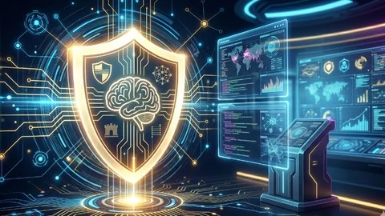
FromFoundational LLM Security to PhD-Level Agentic Defense. Master MCP, RAG Poisoning, and NVIDIA Blackwell TEE Isolati
 Updated on Oct, 2026
 Language - English
AI Assistant

Lectures -112
Resources -100
Duration -1 hours
Lifetime Access

Lifetime Access
30-days Money-Back Guarantee
Get your team access to 10000+ top Tutorials Point courses anytime, anywhere.
Course Description
The transition into 2026 has brought about a silent catastrophe in the cybersecurity industry. For three decades, the perimeter was defined by firewalls, identity providers, and deterministic code paths. If a user was authenticated and the input followed a specific regex, the system was considered secure. That world has ended. We have moved from isolated generative chatbots to autonomous, agentic systems that use the Model Context Protocol (MCP) to execute bash scripts, query production databases, and manage global financial transactions. In this new era, the primary attack surface is not the network; it is the "context layer." Researchers have demonstrated that a single malicious GitHub issue or a poisoned PDF document in a RAG pipeline can hijack an agent's reasoning process, inducing it to exfiltrate private user data or delete production tables without ever stealing a credential. This is the "Vibe Coding" crisis: thousands of developers are building AI applications without understanding that an agent’s implicit trust in its context is a production-level vulnerability.
- Module 1: Foundations and Sovereignty. You will move beyond the "API-first" mindset by provisioning a bare-metal hypervisor and establishing a local Kubernetes control plane for LLM workloads. You will learn to deploy Ollama and Llama 3 in a containerized FastAPI environment, ensuring total data sovereignty from the first lab.
- Module 2 & 3: The Mechanics of the Attack and the Architecture of Defense. You will learn the adversarial mindset by roleplaying "DAN" personas and executing token smuggling attacks. Then, you will pivot to building a defense-in-depth architecture using Llama Guard 3, NeMo Guardrails, and strict Pydantic output parsing. You will learn to defeat automated jailbreak fuzzers through layered semantic monitoring.
- Module 4 & 5: Securing the Data Layer and RAG Pipelines. We tackle the most prevalent enterprise threat: RAG poisoning. You will simulate a "Sleeper Agent" attack where malicious financial data induces an AI to leak information via DNS tunneling. You will then secure this pipeline using RBAC, cryptographic document signing, and vector anomaly detection, ensuring a zero-trust environment for corporate knowledge.
- Module 6 & 7: Agentic Danger and Zero-Trust Orchestration. This is the vanguard of 2026 security. You will exploit and then secure the Model Context Protocol (MCP). You will learn why local MCP servers are a security liability and how to sandbox tool execution environments using gVisor and mutual TLS (mTLS) to prevent lateral movement within the network.
- Module 8 & 9: Privacy and Hardware-Rooted Security. You will explore the limits of cryptographic privacy, implementing differential privacy during fine-tuning. Most importantly, you will master NVIDIA Blackwell Confidential Computing. You will learn to pull encrypted model images directly into TEE memory, ensuring that your weights are never exposed in plaintext even if the host OS is compromised.
- Module 10: Advanced Red Teaming and Compliance. You will map AI vulnerabilities to the MITRE ATLAS framework and automate your security audits for the EU AI Act and DORA. This module ensures that your technical mastery is matched by your regulatory authority, making you indispensable to C-suite leadership.
- This curriculum is architected for three distinct personas filling the critical 4.8 million-person global cybersecurity workforce gap in 2026. The Aspiring AI Security Architect Profile: Senior Engineers or SOC Analysts transitioning to high-stakes AI defense. The Goal: Break the "Principal" level barrier where salaries often exceed $300,000. The Need: A resume-defining "PhD Challenge" to prove competence in securing non-deterministic, agentic systems. The Enterprise DevSecOps Engineer Profile: Professionals managing global deployment pipelines and "Shadow AI" risks. The Goal: Rapidly implement EU AI Act and DORA mandates across the organization. The Need: A practical framework for securing RAG pipelines and building air-gapped clusters to protect corporate IP. The Sovereign HQ Developer Profile: CTOs and independent developers moving away from centralized APIs (OpenAI/Claude). The Goal: Total privacy, cost control, and Technological Sovereignty. The Need: Mastery of NVIDIA Blackwell confidential computing and bare-metal orchestration via our "Zero-Failure" methodology.
Goals
- Architect Sovereign AI Clusters
- Master Adversarial Prompt Engineering
- Deploy Production-Grade Guardrails
- Secure the RAG Data Layer
- Orchestrate Secure Agentic Workflows
- Implement Hardware-Rooted Security
- Execute Advanced Red Teaming
- Automate Compliance Auditing
- Mitigate Model Extraction/Inversion
Prerequisites
- To ensure success in the advanced modules, students must transition from "Vibe Coding" to a disciplined Sovereign Engineering mindset. This course is built for high-intent professionals ready to master the infrastructure of the future. Programming: Intermediate Python 3.12+ proficiency, with a focus on asynchronous execution and Pydantic for data validation. System Administration: Core Linux CLI operations, including bare-metal provisioning and navigating Kubernetes control planes. Hardware / Cloud: Local: Minimum 16GB VRAM (e.g., NVIDIA RTX 3090/4090) for LLM experimentation. Cloud: Compatible with Azure/GCP Confidential Computing instances supporting Trusted Execution Environments (TEEs). Security Mindset: A "Security-First" philosophy is mandatory. You will handle adversarial payloads and must adhere to ethical hacking standards within sandboxed environments. Professional Commitment: This is a technical engineering track. We move beyond "chatting" with models to architecting the systems that power them.
Curriculum
Check out the detailed breakdown of what’s inside the course
Introduction
1 Lectures
-
 Introduction
05:58
05:58
Introduction
05:58
05:58
Module 1: Foundations, Sovereignty, and the Local Sandbox
11 Lectures

Module 2: The Anatomy of the Attack: Prompt Injection & Jailbreaking
11 Lectures
Module 3: Architecting the Defense: Input/Output Guardrails
11 Lectures
Module 4: The Data Layer Threat: RAG Poisoning & Exfiltration
11 Lectures
Module 5: Securing the Vector Store and RAG Pipelines
11 Lectures
Module 6: Autonomous Danger: Agentic Exploitation & MCP
11 Lectures
Module 7: Zero-Trust Orchestration: Defending the Agent
11 Lectures
Module 8: Model Inversion, Extraction, and Cryptographic Privacy
11 Lectures
Module 9: Hardware-Rooted Security & Sovereign Deployment
11 Lectures
Module 10: Advanced Red Teaming, Compliance, and the Capstone
11 Lectures
Conclusion
1 Lectures
Instructor Details

Bayt Al Hikmah
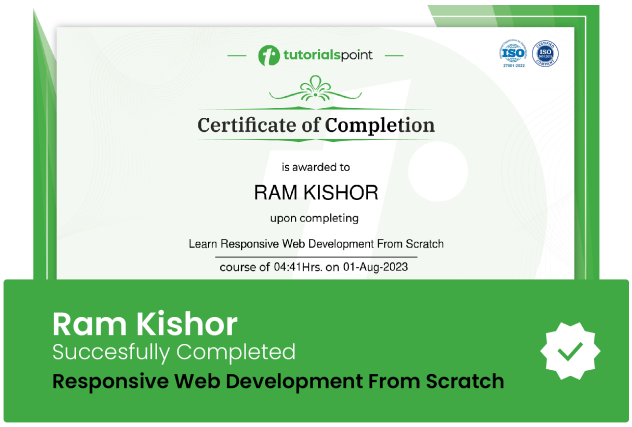
Course Certificate
Use your certificate to make a career change or to advance in your current career.
Our students work
with the Best















Related Video Courses
View MoreAnnual Membership
Become a valued member of Tutorials Point and enjoy unlimited access to our vast library of top-rated Video Courses
Subscribe now
Online Certifications
Master prominent technologies at full length and become a valued certified professional.
Explore Now