Python Programming
#python #programming
 Updated on Nov, 2026
 Language - English
AI Assistant

Lectures -30
Quizzes -3
Resources -1
Duration -1 hours
Lifetime Access

Get your team access to 10000+ top Tutorials Point courses anytime, anywhere.
Course Description
Course Title: Python Programming Fundamentals
Course Description:
This course serves as an introduction to Python programming, one of the most versatile and widely-used programming languages in the world today. Python's simplicity, readability, and flexibility make it an ideal choice for beginners and professionals alike, whether they are interested in web development, data science, artificial intelligence, or any other field.
Throughout this course, students will delve into the fundamental concepts of programming using Python. Starting with basic syntax and data types, students will progressively build their skills in problem-solving and algorithmic thinking. They will learn how to write clean, efficient code and how to use essential Python libraries and tools.
Key topics covered in this course include:
- Introduction to Python: History, features, and applications.
- Python Installation and Environment Setup: Setting up Python on different platforms and using integrated development environments (IDEs) like Google Colab.
- Basic Syntax and Data Types: Variables, operators, data structures (lists, tuples, dictionaries), and control flow (conditional statements, loops).
- Functions and Modules: Writing and using functions, organizing code into modules for better code reuse and maintainability.
- File Handling: Reading from and writing to files using Python's built-in file handling capabilities.
- Object-Oriented Programming (OOP) Concepts: Classes, objects, inheritance, encapsulation, and polymorphism.
- Error Handling: Understanding and handling exceptions to write robust and reliable code.
- Introduction to Python Libraries: Overview of popular libraries such as NumPy, Pandas, and Matplotlib
- Introduction to Data Science with Python: Basic data manipulation and analysis using Pandas and visualization using Matplotlib.
This course emphasizes hands-on learning through programming exercises, projects, and real-world examples. By the end of the course, students will have a solid foundation in Python programming and will be ready to explore more advanced topics or specialize in specific areas according to their interests and career goals.
Goals
Develop Proficiency in Python Syntax: By the end of the course, students should be able to understand and write Python code fluently, utilizing proper syntax and adhering to Pythonic principles.
Problem-Solving Skills: Students will develop problem-solving skills through various coding exercises and projects, allowing them to tackle real-world problems efficiently using Python.
Understanding of Fundamental Concepts: Gain a solid understanding of fundamental programming concepts such as variables, data types, control flow, functions, and object-oriented programming (OOP) principles.
Effective Use of Python Libraries: Learn to leverage essential Python libraries for tasks such as data manipulation, analysis, visualization, and web scraping, enabling students to work efficiently in various domains.
Code Organization and Reusability: Understand the importance of writing clean, modular code and organizing it into reusable functions and modules, enhancing code maintainability and scalability.
Error Handling and Debugging: Develop the ability to handle errors gracefully and effectively debug Python code, ensuring the robustness and reliability of their programs.
Preparation for Advanced Topics: Lay the groundwork for further exploration of advanced Python concepts and specialized areas such as web development, machine learning, or artificial intelligence, empowering students to pursue more advanced studies or career opportunities.
Critical Thinking and Creativity: Encourage critical thinking and creativity in problem-solving, fostering innovative solutions and approaches to programming challenges using Python.
Project-Based Learning: Emphasize project-based learning to apply acquired knowledge and skills in real-world scenarios, reinforcing learning outcomes and preparing students for practical applications in their future endeavors.
Prerequisites
Only prerequisites are what is Computer and having a Laptop or a PC. Nothing else!!!!
Curriculum
Check out the detailed breakdown of what’s inside the course
About the course
7 Lectures
-
 Welcome to the Course
07:35
07:35
-
Introduction to Python (What, Why and How of Level 1)
01:12
01:12
-
How To Use Python Online Using Google Colab For Free
06:39
06:39
-
Exercise 1.1 Our First Python Code (Hello World)
00:45
00:45
-
Answer 1.1 Our first Python Code(Hello World
01:14
01:14
-
Optional Lecture Who Uses Python & What are the Pros & Cons of Python
04:09
04:09
-
Quiz-1
Level 2 Data Type and Variables
13 Lectures

Level 3 Python Math and Strings
10 Lectures
Instructor Details

Yash Sahu
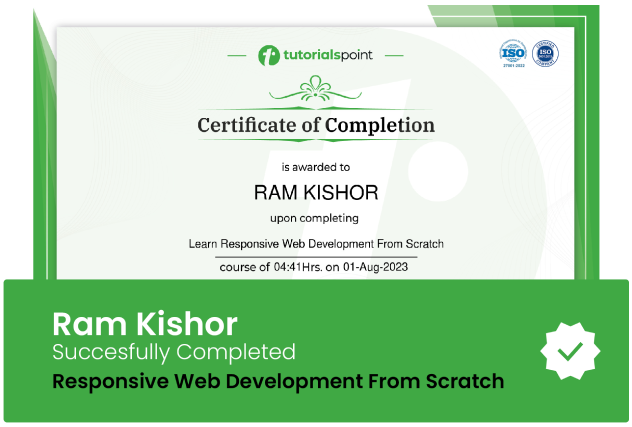
Course Certificate
Use your certificate to make a career change or to advance in your current career.
Our students work
with the Best














Related Video Courses
View MoreAnnual Membership
Become a valued member of Tutorials Point and enjoy unlimited access to our vast library of top-rated Video Courses
Subscribe now
Online Certifications
Master prominent technologies at full length and become a valued certified professional.
Explore Now