E-Justice: How find mistakes of algorithmic in Laws
Learn to find mistakes of algorithmic in Laws
 Updated on Sep, 2026
 Language - English
AI Assistant

Lectures -7
Resources -6
Duration -37 mins
Lifetime Access

Lifetime Access
30-days Money-Back Guarantee
Get your team access to 10000+ top Tutorials Point courses anytime, anywhere.
Course Description
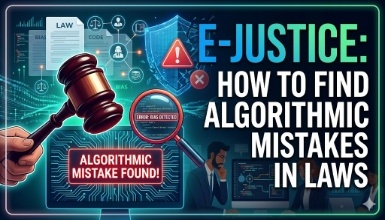
All Procedures described in Laws contain mistakes that affect their execution.
Every day, we are faced with procedures described in the laws, and we must follow them.
At the same time, the lawmaker pays attention to issues requiring regulation (that is, the development of a text describing procedures), but often omits some aspects, considering them irrelevant.
This approach cannot be considered erroneous, as long as normative legal acts are applied by people, not computers.
However, this means that Procedures in the Laws contain so-called "algorithmic mistakes."
The degree of informatization in modern society is constantly growing -the number of individual mobile devices with Internet access is steadily increasing.
In the context of jurisprudence, this leads to a constant increase in demand for "wide access to Justice" and "e-justice."
That is, the laws must be such that they can be carried out with the help of computers.
Let’s see what an "Algorithmic Procedure" is.
A Procedure is algorithmic if the set of Actions included in the Procedure, their logical sequence, interconnection, and consistency ensure the achievement of the result.Algorithmic mistakes include:
- Confused order of Actions
- Missing Actions
- Dangling links
- Action time not specified
I will teach you how to do it.
Examples of converting texts from legislation:
- Australia
- European Union
- United States
Goals
- improve the competencies of Legal Engineers.
- find mistakes of algorithmic in Laws.
- correct and improve Laws.
- provide demand from society for "wide access to Justice" and "e-Justice"
Prerequisites
Business analyst competencies can be useful, but not necessarily.
Curriculum
Check out the detailed breakdown of what’s inside the course
Introduction
1 Lectures
-
 Introduction
05:07
05:07
Introduction
05:07
05:07
Text visualization tools
2 Lectures

Examples of visualization of texts from laws of countries of the world
5 Lectures
Conclusion
1 Lectures
Instructor Details

Oleh Hutsa
- Ph.D. (2003), Associate Professor (2014)
- Expert in knowledge-oriented information technologies (business processes, automated decision support systems)
- from 2009 teach the course "Modeling business processes" and "Decision Support Systems" at the universities of Kharkiv (Ukraine)
- 12 years of work in business - 9 years’ production manager, production company director (cabinet furniture, windows), 3 years’ director of the natural gas supply department.
- 10 years of work in the Design Bureau of Instrument-Making Plant named after T.G. Shevchenko (Kharkiv, Ukraine) from the position of technician to the leading engineer - design and support of computer production, programming.
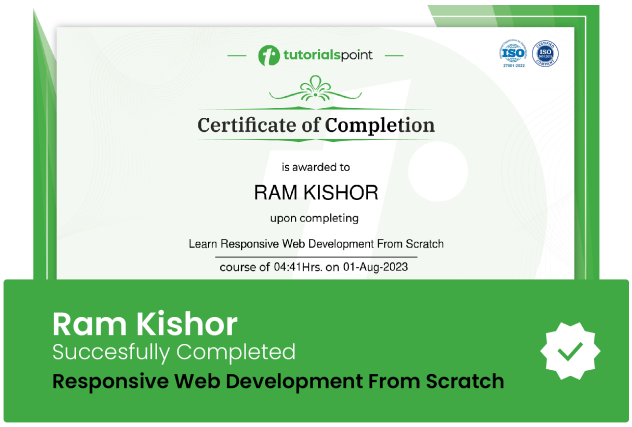
Course Certificate
Use your certificate to make a career change or to advance in your current career.
Our students work
with the Best

















Related Video Courses
View MoreAnnual Membership
Become a valued member of Tutorials Point and enjoy unlimited access to our vast library of top-rated Video Courses
Subscribe now
Online Certifications
Master prominent technologies at full length and become a valued certified professional.
Explore Now